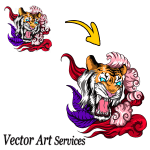
Turn Your Logo Into Stitches Embroidery Digitizing Made Easy Best Digitizing Guide 2026
Transform your business or personal logo into professional embroidery with this essential 2026 guide! Learn a simplified, step-by-step digitizing process to convert any vector or image into a stitch-perfect file. We cover clean satin borders, optimal fill density, and crucial underlay settings to ensure crisp, durable results on caps, polos, and jackets. Elevate your brand or create unique gifts with this must-watch tutorial for flawless logo embroidery every time.
✨ ✨ Video Highlights ✨ 💜
Transform your business or personal logo into professional embroidery with this streamlined 2026 guide! We simplify the digitizing process, ensuring your brand translates beautifully from screen to stitch.
🔮 Pre-Digitizing Logo Preparation:
🔹 💜 File Format & Quality Check:
Learn which logo file types work best (vector vs. raster) and how to prepare them for clean digitizing. We demonstrate simple fixes for low-resolution images and complex color gradients.
🔹 🎨 Color Reduction & Simplification:
Master the art of simplifying your logo’s color palette for embroidery without losing brand identity. We show techniques for maintaining visual impact while reducing thread changes and production time.
🔹 📐 Size & Detail Optimization:
Understand how to scale your logo for different applications while preserving critical details. Learn what elements to emphasize and what to simplify for clear, legible embroidery at any size.
🔍 Step-by-Step Digitizing Process:
🔹 🖋️ Text & Typography Handling:
Digitize logo text with clarity using satin stitches for small text and fill stitches for larger letters. We demonstrate techniques for maintaining font personality and readability in thread form.
🔹 🔄 Graphic Element Translation:
Convert logo graphics, icons, and symbols into embroidery-friendly elements. Learn stitch type selection, underlay strategies, and detail preservation methods for various graphic styles.
🔹 🌀 Composition & Stitch Flow:
Recreate your logo’s visual hierarchy and balance through strategic stitch sequencing and density planning. We demonstrate how to guide the viewer’s eye just like the original digital logo.
👁️🗨️ Watch For:
Live digitizing sessions transforming three different logo styles (minimalist, detailed, text-based), before-and-after comparisons showing optimization improvements, common logo digitizing pitfalls with quick fixes, and export settings for professional results.
Perfect for: Business owners branding apparel, sports teams creating uniforms, organizations making promotional items, and individuals wanting professional-looking custom embroidery. Elevate your brand with perfectly digitized logos!
Turn Your Logo Into Stitches | Embroidery Digitizing Made Easy | Best Digitizing Guide 2026
Your logo is the face of your brand, and translating it into crisp, durable embroidery can elevate your merchandise, uniforms, and marketing materials. 💜 With the right guide and modern tools, digitizing a logo for embroidery is an achievable skill that yields professional results. This 2026 guide simplifies the process, from preparing your artwork to choosing the perfect stitches, ensuring your brand makes a flawless stitched impression.
✨ 💜 Top 5 FAQs 🧵 ✨
1. 💜 How do I prepare my digital logo file for the best digitizing results?
Start with the highest quality vector file you have (like .AI, .EPS, or .SVG). 💜 Vector graphics are made of paths, not pixels, allowing for clean, scalable outlines. If you only have a .JPG or .PNG, use software tools to increase contrast, remove the background, and simplify small details before importing. A clean, high-contrast image is crucial.
2. 💜 Which stitch types should I use for different parts of my logo?
The rule of thumb is: Use Satin Stitch for text and thin borders (under 8mm wide) to create a smooth, shiny finish. 💜 Use Fill Stitch (Tatami) for larger solid areas within shapes. For very fine details or hairline elements, a Run Stitch may be necessary. Avoid using fill stitch for tiny text, as it will look bulky.
3. 💜 How can I prevent small text in my logo from becoming blurry or filled in?
For small text, satin stitch is mandatory. 💜 Ensure the column width is no less than 1.5mm and that letters have adequate spacing (kerning). In your digitizing software, you may need to manually adjust the stitch paths for complex script fonts to ensure each letter stitches cleanly without jumps or overlaps.
4. 💜 What is “pull compensation” and why is it vital for logos?
Pull compensation is a software setting that digitally expands shapes to counteract the fabric’s natural pull inward as stitches are formed. 💜 Without it, perfect circles in your logo can become ovals, and text can look pinched. Applying 0.1mm to 0.3mm of pull compensation is a key step for a logo that retains its intended proportions.
5. 💜 What is the final, non-negotiable step before production?
You must stitch a sample on the exact fabric and stabilizer you plan to use for the final product. 💜 This test reveals issues with density, registration, and color that are invisible on screen. It allows you to make final adjustments, ensuring your logo looks sharp and professional on hundreds of hats, polos, or bags.
If you’re looking for a top-quality embroidery design digitizing & vector art service, look no further than ours! With quick turnaround times and excellent quality, we’re the perfect choice for anyone looking for a reliable and affordable option.
Get 50% OFF On Your First Order Always get a preview before you pay so that you know exactly what your design will look like. We guarantee you won’t be disappointed!